Democratizing Access to ICoNS Research Literature Through AI-Mediated Translation: A Three-Agent Framework for Family Empowerment in Newborn Screening

ICoNS'25 in London, England • October 23-24, 2025
Slide 0 / 6
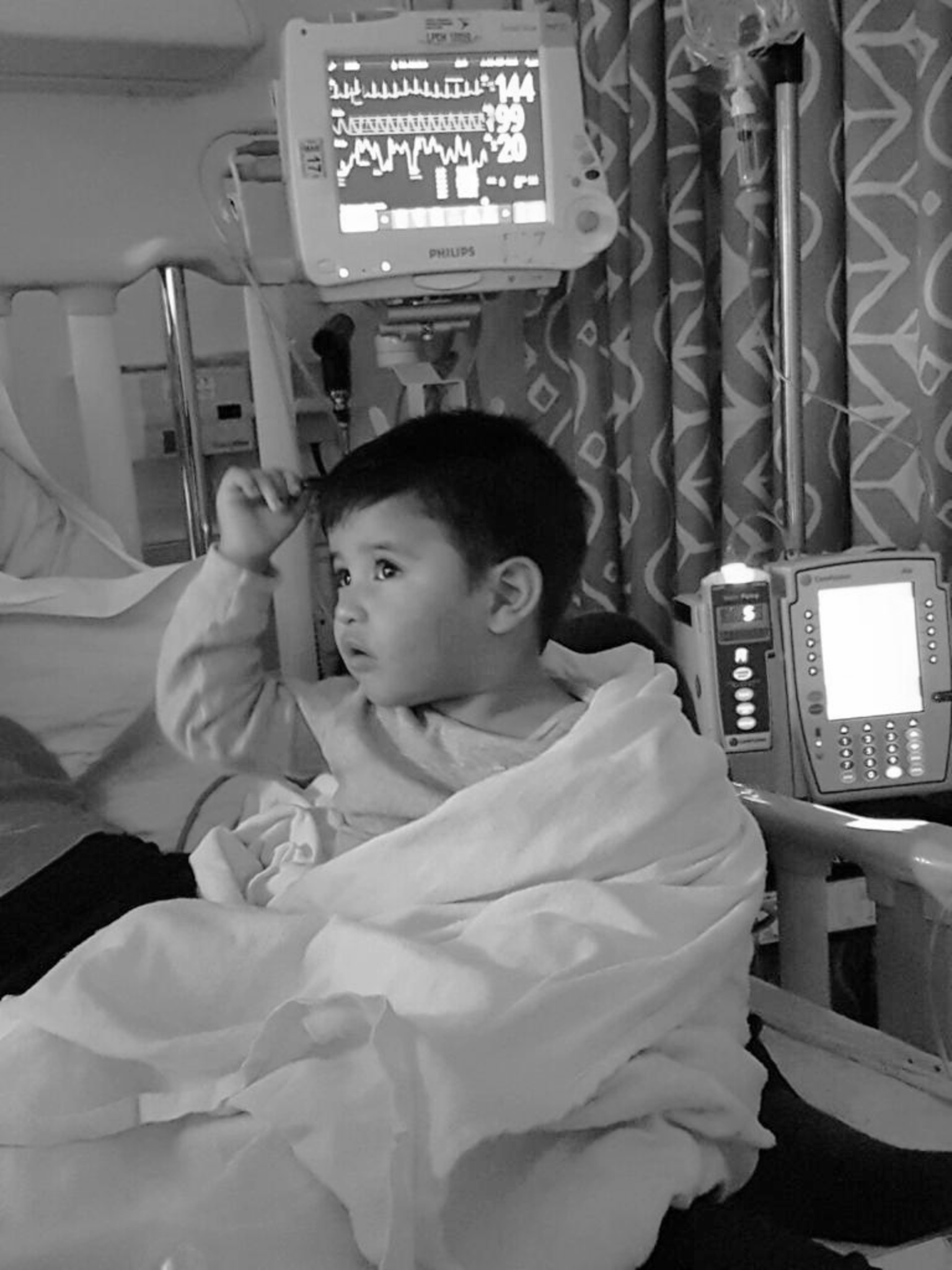
Daniel's Son - Inspiration
Daniel Uribe, MBA
Founder and CEO of GenoBank.io • PhD Candidate in "Decentralized Biobanking" at UTS (Sydney) • Proud ICoNS Member since 2022
Personal Inspiration: My son's variant is related to Glanzmann Thrombasthenia—he is the inspiration for this research.
Continuing from ICoNS 2024 (New York, November 2024)
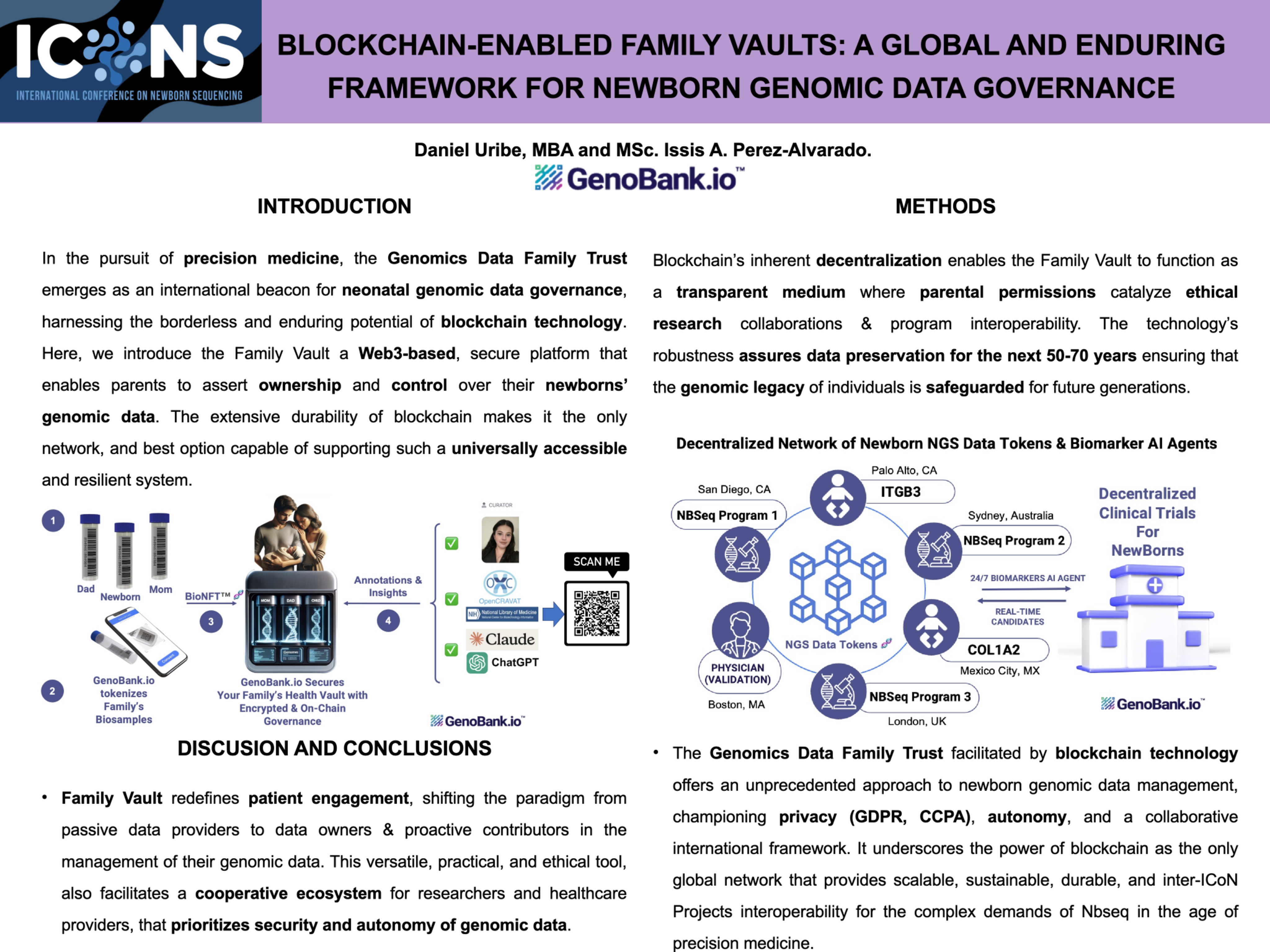
ICoNS 2024 Poster - New York
The Knowledge Asymmetry: Parents Are Already Using LLMs
Medical Researcher
Researchers Have:
  • ✅ Full VCF files
  • ✅ ICoNS research papers
  • ✅ Expert interpretation tools
  • ✅ Multi-language AI access
Family with Newborn
Parents Have:
  • ❌ No access to VCF files
  • ❌ Research papers behind paywalls
  • ❌ Generic LLM responses
  • ❌ Language barriers (English-only)
  • The Solution: Give parents the opportunity to explore their newborn's DNA with data privacy & scientific guidance
    • Data Privacy: Access to their newborn's VCF files through secure private vaults (data ownership rights)
    • Scientific Guidance: ICoNS research papers as LLM context (protective guardrails against misinformation)
    • Language Equity: Multi-language support—English, Mandarin (中文), Spanish, Portuguese, etc.
Agent 1: Research Papers as LLM Guardrails
VCF Data
VCF File
(Genomic Data)
+
Research Papers
ICoNS Research
Paper Library
→
Research-Gated VCF Analysis

Claude AI
Claude AI analyzes genomic variants within the protective context of peer-reviewed ICoNS research papers
17 papers with gene panels
— OR —
🖥️ Agent 1 Live Processing
Claude Haiku 4.5
[SYSTEM] Loading paper: Veldman_DNA-first_IMD_treatability.pdf
[SYSTEM] Format detected: HTML (685KB)
→ Removing navigation elements...
→ Extracting main content...
→ Found paper title: "Challenges with diagnosing and treating inborn metabolic..."
→ Scanning for gene panels...
✓ Identified 8 genes: OTC, ARG1, ASS1, ASL, NAGS, CPS1, SLC25A13, ALDH18A1
✓ Condition: Urea cycle disorders + metabolic diseases
✓ Recommendations: Newborn screening with expanded gene panels
✓ Analysis complete: 7.2 seconds
Input: 4,203
Output: 312
Time: 7.2s
Agent 2: Intelligent Annotator Selection
GenoBank Knowledge Vault - 146 Annotators
OpenCRAVAT
AI Model
Claude Opus 4.1 - Context-aware annotator selection
Knowledge Base (146 Annotators)
  • ClinVar, ACMG, OMIM, gnomAD, CADD, SIFT, PolyPhen
  • COSMIC, Cancer Gene Census, HPO, AlphaMissense
Selection Process
  • Analyzes paper context → matches genes to databases
  • Assigns relevance scores (1-10) → optimizes depth vs. runtime
Performance
~12s | 146 annotators | 6,814 input / 1,523 output tokens
Triggers OpenCRAVAT annotation with selected tools
2

OpenCRAVAT Annotator Selection Agent Pending

Claude Opus 4.1 - Intelligent annotator selection based on paper context

VCF File: 41221040804049.deepvariant.agilent_v8.vcf
Sample: Newborn (Example - Elias)
Context: SCN2A variants - Intractable epilepsy in children
🖥️ Agent 2 Live Processing
Claude Opus 4.1
[SYSTEM] Analyzing paper context from Agent 1...
Paper focus: SCN2A variants in intractable epilepsy
→ Scanning 146 available OpenCRAVAT annotators...
→ Prioritizing clinical relevance databases...
✓ ClinVar (10/10) - Clinical significance essential for SCN2A
✓ OMIM (9/10) - Gene-disease relationships for epilepsy
✓ gnomAD3 (9/10) - Population frequencies for SCN2A variants
✓ REVEL (8/10) - Pathogenicity prediction for missense variants
✓ CADD (8/10) - Deleteriousness scoring
→ Adding functional impact tools...
✓ dbNSFP (8/10) - Multiple prediction algorithms
✓ MaveDB (7/10) - Functional assays for ion channels
→ Including tissue expression data...
✓ GTEx (7/10) - Brain tissue expression patterns
✓ 15 annotators selected - Optimized for epilepsy analysis
Input: 6,814
Output: 1,523
Time: 12.4s
Agent 3: Family-Accessible Reports in Any Language
3

Genomic Variant Analysis Agent Pending

Claude Sonnet 4.5 with Extended Thinking - Deep variant interpretation

Family with Newborn
Language:
🖥️ Agent 3 Live Processing
Claude Sonnet 4.5 + Extended Thinking
[SYSTEM] Loading OpenCRAVAT SQLite database...
Database: 307,219 annotated variants from deepvariant.agilent_v8.vcf
→ Filtering for SCN2A gene from paper context...
→ Prioritizing ACMG pathogenic/likely pathogenic variants...
🧠 [THINKING] Analyzing variant chr2:165,310,420 C>T (rs121918662)...
🧠 [THINKING] ClinVar classification: Pathogenic (5 stars)
🧠 [THINKING] gnomAD frequency: 0.00003 (ultra-rare)
🧠 [THINKING] REVEL score: 0.92 (highly deleterious)
🧠 [THINKING] Cross-referencing paper: SCN2A missense linked to epileptic encephalopathy
🧠 [THINKING] Therapeutic implications: Sodium channel blockers contraindicated
🧠 [THINKING] Genotype-phenotype: Loss-of-function → severe epilepsy phenotype
🧠 [THINKING] Family counseling: Genetic testing for siblings recommended
✓ Key Finding: SCN2A p.Arg853Gln - Pathogenic variant confirmed
✓ Clinical significance: High confidence pathogenic (ClinVar 5-star)
✓ Therapeutic guidance: Avoid sodium channel blockers, consider precision therapy
✓ Next steps: Genetic counseling + pediatric neurology referral
✓ Family-friendly report generated: 18.6 seconds
Input: 12,403
Thinking: 8,921 🧠
Output: 2,145
Time: 18.6s
  • Breaking Language Barriers: Parents deserve genomic insights in their native language
    • Claude's multilingual capability ensures equal access for non-English speakers
    • Same quality of analysis for Mandarin, Spanish, Portuguese speakers as English
    • No information loss in translation—technical accuracy preserved
  • Extended Thinking for Deep Reasoning: 10,000 token budget for complex interpretation
    • Genotype-phenotype correlations cross-referenced with ICoNS research
    • ACMG pathogenicity classifications with therapeutic implications
    • Family-friendly language without sacrificing clinical precision
  • Research-Grounded Output: Every recommendation traceable to ICoNS papers
    • Prevents misinformation by citing specific research findings
    • Parents can verify claims against original publications
  • Affordable Access: Democratizing genomic understanding
    • ~$2.45 per analysis vs. $450+ traditional expert review
    • Cost should never be a barrier to understanding your child's genomic data
4 Key Points for Genomic Equity in AI Era
Empowered Families
  • 1. Parental Ownership & Understanding: Parents should own, access, control, and be empowered to explore their newborn's genomic datasets
    • Research papers and blockchain provide secure rails to close the knowledge gap
    • VCF files belong to families, not locked in lab systems
    • Genomic data should be as accessible to parents as to researchers
  • 2. Biology is Now Software: Human healthcare has become a biodata engineering problem
    • 207 ICoNS papers create a "safe context window" for LLM analysis
    • Prevents misinformation by grounding AI responses in peer-reviewed research
    • Parents get the same research foundation that researchers use
  • 3. AI Benefits for All: AI is here to stay—both parents and researchers should benefit from it in their corresponding contexts
    • English, Mandarin, Spanish, Portuguese—same quality for all families
    • A Mexican parent deserves the same ICoNS-grounded insights as a doctor in Boston
    • ~$2.45 per analysis vs. $450+ traditional expert review
  • 4. Cross-ICoNS Network: We need a cross-ICoNS network of biodata and AI infrastructure
    • Enable parents to share their newborn's genomic sequence with as many ICoNS programs as they see fit
    • Affordability removes economic barriers to genomic understanding
    • Cost should never be a barrier to understanding your child's genomic data

Closing the Knowledge Gap

Every parent has the right to understand their child's genomic data—in their own language, with research-grounded accuracy.
The Three-Agent Framework makes this equity a reality.